Showing posts with label Review. Show all posts

Tuesday, August 31, 2010

Graphic Novels

Few art mediums have worked as hard to gain credibility as graphic novels, perhaps fantasy and sci-fi in their quest to be regarded as literature. Legitimacy seems to have been granted given the expanding sections of this genre in libraries and bookstores, but many, including me remain sheepish when perusing them.

I jumped on the bandwagon with many when Batman: The Dark Night Returns and The Watchmen appeared on the scene. Both jump started the genre to such a degree that they're on the minds of many today due to their Hollywood adaptations. I became more impressed with this genre and moved through the works of Pekar (a full tribute is in the works).

The Adventuress by Audrey Niffenegger (author of The Time Traveler's Wife) was originally published by hand in the 80's. It reminds me of La passion de Jeanne d'Arc – the threshold, the tears behind those eyes, the isolation, and the nuns. Egypt also comes to mind: hands floating without arms hold veils, wine-glasses, and judgement; Eyes sometimes swirl but never blink or have a face. There's also alchemy, a cat, and transformation. The soul mourns a body with crossed arms folded under the chin. Ancient Greece comes to mind with play on weaving (Penelope); however, here a skirts unravelled to create a cocoon. The character seems to have conflicting emotions (thumoi) given the cleft figure and one that hugs and chokes itself. It's such a fantastical world that she, a moth, feasted on Napoleon's books.

The Pride of Baghdad presents war through the eyes of lions. At times the novel becomes too anthropomorphic — sex and rape, moral dilemmas (whether or not to eat humans) — but the point gets across. War starts when the zoo keepers throw them a donkey, enough food to last a while. Bombs blow up the pen's walls and they're free. They embark on a journey and on the way meet a wise turtle who states,

Tigris is the name of the river, dummy. … Everything's got a name. It's how we make crap belong to us. And this stretch of crap is my fishing hole.

There's black stuff under the earth, boy. Poison. When the walkers fight, they send it spewing into the sky, and spilling into the … into the sea.

Although the dialogue can be predictable, the illustrations make use colour very effectively, the dark grey and sepia of tragedy and bright tones for violence. On the whole, the work seems a little too surreal for war, but that might just be how lions view things.

Saturday, April 25, 2009

Cost of War

When Obama released the torture memos he cracked the dam of complicity and unleashed wave of fear. In the aftermath he has assured CIA agents that they will not be prosecuted, but has not done the same for Bush aides (perhaps Bush should have pardoned himself).


In many places the cost of conflict is quite obvious:


However, this hasn’t really been the case for the U.S.: an estimated 320,000 troops have suffered a Traumatic Brain Injury while deployed and the ban on covering the transportation of coffins from war zones has only been lifted for a few months.


Fortunately, The Corporal’s Diary does much to detail the cost of war. The movie is based on Jonathan Santos’s personal video footage — him clowning around with the guys, playing with his dog, and then serving in Iraq — and his diary, which is passionately read aloud by his brother. This footage is pure, having little pretence or performance. Patricia Boiko, the director, connected with Jonathan’s mother through the Eyes Wide Open exhibit (an excellent portrayal of the human cost of war). She then edited Jonathan’s footage and her own of his family and friends into this moving piece. The Santos family deserves much credit for being so natural and vulnerable before the camera. As Jonathan’s mother tearfully states,


If you could have filmed me when they knocked on the door and they told me that Jonathan was dead, if you could film that and Americans heard that, there’s no way that they’d want any other mother to hurt like this.

Thursday, April 23, 2009

Leonard Cohen

Upon the heels of many favourable reviews, I awaited in eager anticipation for my night with Leonard Cohen, especially after listening to The Collection and watching Jian’s interview:


Cohen himself was simply amazing, especially at 74: he shuffled and skipped across the stage, and spent much time on his knees serenading instruments and phantom lovers. His kind disposition shone through, addressing the crowd as friends and displaying genuine appreciation at the vigorous applause; furthermore, he employed his dry wit eliciting hearty laughs from the audience, e.g. asking the singers to keep singing at the end of In my Secret Life and ending with I Tried to Leave You. Cohen remains so cognisant of the human condition: he commented on how fortunate we are to gather when suffering’s so prevalent in the world. Whenever he recited lyrics he left many with goosebumps and tingles — A Thousand Kisses Deep still resounds within me.


Cohen remains a reluctant star, perhaps the reason he surrounded himself with so many great musicians to whom he repeatedly doffed his hat. Javier Mas, who met Cohen via Mas’s tribute Acordes Con Leonard Cohen, astounded audiences on the laud, bandurria, and guitar. Mas is an innovative musician who enjoys jamming with diverse instrumentalists, such as tabla player, Prabhu Edouard (reminiscent of Béla Fleck and Sandip Burman). 


Neil Larsen tactfully interwove his ghostly reverberations through most songs, at times hardly noticeable, but on Hallelujah he broke out with great flair. I really enjoyed Roscoe Beck’s bump and slide technique on the upright bass. Sharon Robinson filled the arena with her incredible voice and sensitive vibrato, especially on Boogie Street. (Here’s a great interview with Sharon). The Webb Sisters also amazed with their sweet harmonies and gave a spine-tingling performance of If it be your Will. I thought Dino Soldo was best on the harmonica, but appreciated his sensitivity on other songs. Bob Metzger and Rafael Bernardo Gayol did a good job holding it all together.


In the end one can only wonder at Cohen: his extensive catalogue, his sensitive interpretation of the human condition, his ability to capture a scene in a song, and the fact that he has performed over one hundred times this year and plans on doing another hundred. If you are unable to see him live purchase Live in London; this production does a good job of capturing the magic of his performance (as much as the medium can).

Saturday, April 11, 2009

Medea

Although buildings rise for numerous other faculties at the University of Victoria, the administration has no immediate plans to construct any for the Faculty of the Humanities; however, crumbs do fall, since Humanities gets assigned the vacated space of other faculties. Nevertheless, the faculty remains rich in many other ways—one of its treasures, the Lansdowne Lectures, has brought outstanding scholars to UVic for over 30 years. At a recent GRS gathering for Ian Morris, the most recent Lansdowne recipient, the conversation turned to modern portrayals of ancient Greece and Rome. Due to the labours of scholars, such as Keith Hopkins, moderns have a much more comprehensive view of ancient Roman society. Gritty productions, such as HBO’s Rome, have supplanted Sword-and-Sandal epics and portrayed the city’s eastern lavishness:


From every land and sea are brought the fruits of each season, whatever all the farms and rivers and lakes produce, by Greek or barbarian techniques. It follows that, if anyone wishes to behold all these things, he must travel the known world to gaze on them—or he must be in Rome (Aelius Aristides, To Rome 10–11).


The lowest estimate has India, China, and the peninsula of Arabia removing from our Empire each year some 100 million sestertii. That is the price our luxuries and our wives cost us (Pliny, Natural History 12.84). (Both translations from Greek and Roman Technology, p. 494–5).


Nevertheless, the same cannot be said for ancient Greece: modern society still view this culture through the clean crisp lines of fluted columns. Sanctuaries (the focus of my research) were lively gathering places that fulfilled a variety societal functions: exhibition, mediation, and protection; furthermore, Greek democracy comprised a series of public oaths, duties, and oratories.


One exception, however, is modern portrayals of Greek drama. Ground breaking productions, such as The Gospel at Colonus have led the charge and scholars, such as Helene Foley, who requires senior students to produce a play themselves, have supported these productions. Over the years, UVic’s Phoenix Theatre has produced a number of Greek tragedies and comedies, and garnered abundant praise for their efforts. Euripides’ Medea, their latest offering, stunned audiences.


Not only did modern events, such as a father murdering his five children, make the play extremely relevant, but the play was stellar from the foundations. Linda Hardy, the director, embraced Euripides version of the myth in which Medea murders her own children to spite Jason. The changes the director made to the text were sensible, such as expanding the role of the tutor and adding a nurse. The stage designers also excelled, creating a functional and mystical setting:


The choreography successfully integrated the chorus with the rest of the cast. The chorus itself, consisting of vocalists specialized in various genres, scintillatingly oscillated between screams, hums, and cries. Lastly, and most deserved of praise, the actors, in particular Katie Takefman who played Medea, provided the audience with an emotional/philosophical roller-coaster ride that evoked the cathartic intention of ancient Greek tragedy.


Monday, March 23, 2009

Blasting Bush

Bush offered to advise Obama on a recent visit to Calgary for his first paid speaking engagement. Some might say that Bush chose this location due to its reputation as Canada’s Texas, but Calgarians responded appropriately by stock-piling shoes at the conference centre’s entrance. Fortunately none of them will receive a three year sentence for doing so.


Last week I watched, You’re Welcome America. A Final Night with George W. Bush, Will Ferrell’s Broadway debut, on HBO. Overall the production was excellent: Ferrell adroitly impersonated Bush with the skills he honed on SNL (never dropping out of character for the show’s entirety), and clever filming captured much of the stage atmosphere. Ferrell came up with some gems like “wing take dream (a Bushism),” “the Tiger Woods guy (Obama),” and “Swiss (blond haired, not swarthy) Jesus.” Nevertheless, the funniest sketch was Operation Primate Spear Gun. In this fictional sketch, Morocco supposedly committed to send 2,000 monkeys to Iraq to clear mines and entertain children. Although Morocco reneges, Ferrell’s Bush recounts how he set up a base for training primates in N.C. In the end, most of the monkeys escape and spear gun fatalities rise over 1,000 percent.


The performance, however, does become tedious at times, a regular feature of Ferrell’s work (here, to Grohl's discomfort):


Tuesday, March 10, 2009

Damon Galgut

Last week I glutted myself on works by Damon Galgut — an author whose tensile prose compels the reader to struggle with the protagonist on a journey of self-realization. I started with his short stories: An African Sermon (August 2004) begins with a train journey and weaves in a personal confrontation with the Rwandan genocide. (Regarding this topic, works by Jean Hatzfeld and Romeo Dallaire are essential). The Conversation (Oct 2006) tracks Father Angelo through a crisis of faith in the midst of an African conflict: What is faith? What is humanity? What is my role in it? The Lover (Dec 2008) details a loner’s journey through Africa (and on to Europe) while he grapples with social awkwardness and self acceptance, which stymie his love’s desire. Galgut cleverly embodies the protagonist’s fractious nature by fluctuating between the first and third person to mark changes between his “true”-self and his observing-nature.

The Good Doctor (2003), a Man Booker finalist, explores the tension in characters stationed at a remote (and barely necessary) hospital. Unresolved struggle is a trademark of Galgut’s writing, and he employs Africa’s stark, arid, and abandoned landscapes to explore it. Reading such a work is like being underwater and trying to reach the surface; however, you never do, so that you marvel that you’ve stayed under so long. But in the end you realize you were never swimming in water, but through your own streams of consciousness; thus, desperation, despair, difficulty, and despondency come to define humanity.


The Quarry (1995, 2004), was not published outside of South Africa until the success of The Good Doctor; however, this quirk of fate remains puzzling to me since I found The Quarry to be much more satisfying, and this novel was turned into a film that won Grand Prix of the Americas at the 1998 Montreal Film Festival. Here Galgut meanders his story around an abandoned quarry, which now houses a dead body and illicit drugs; such a feature, however, only helps focus the blight on the human landscape, as a criminal impersonates the minister he just murdered. Galgut first experimented with pronouns here: at the end of the book he uses no proper nouns; instead, the third person refers to a number of characters, each with its own short chapter (only the capitalisation of each pronoun differentiates the characters). This device successfully adds to the novel’s depth and demands a close reading.


In The Impostor (2009), Adam has let his life slide away. Unsure of who he his, he recalls that he once wrote poetry, and sets off to the country to be a poet. In his brother’s cottage the weeds have grown so thick that Adam gets a reprimand from the township. He plans to cut them back, but doesn’t so they become a symbol of his impotence (in writing as well). One day he decides it’s enough and heads to the hardware store for equipment where he meets Canning. Canning’s wife inspires him to write once more, but he soon learns that the lovely spot he spends his weekends at will be destroyed. Once more the protagonist must explore his own depths to come to terms with himself.


Reading Galgut can be like driving down a road on which you have no sense of direction or control, but at the end you’ll have exorcised humanity’s (and your own) woes. His exceptional prose keeps your foot on the accelerator until the end where you gain an un-obstructed view of the entire journey. As a side note Alistair Morgan, another South African author (and Plimpton prize winner), processes similar angst via the landscape. I just applied for FIFA 2010 tickets; hopefully I’ll be able to visit South Africa’s compelling scenery then.

Monday, March 09, 2009

Watchmen

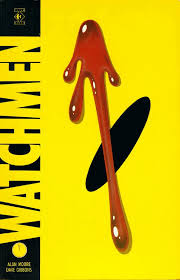
Watchmen was the first graphic novel that I ever purchased. As soon as I opened it, I got lost in its pages. In anticipation of the feature film, I skimmed through the graphic novel and watched episodes of the Watchmen Motion Comic. I was surprised by how much I had forgotten; in particular, the quality of Moore’s flowing prose:

“Dog carcass in alley this morning, tire tread on burst stomach … the streets are extended gutters and the gutters are full of blood and when the drains finally scab over, all the vermin will drown.”


“The city is dying of rabies. Is it the best I can do to wipe random flecks of foam from its lips”


“Is that what happens to us? A life of conflict with no time for friends so that when it’s done only our enemies leave roses.”


The Motion Comic is an excellent adaptation and has number of well chosen quotes by Nietzsche, Farjean, Dylan, Jung, and Shelley to the end of each section, replacing the newspaper-style articles on Watchmen. (The graphic novel had one quote from Juvenal Satires, sed quis cutodiet ipsos custodes?” or loosely, “but who watches the watchmen?”).


Last night I watched the feature film, throughout which Snyder employs the hyper-violence associated with his past films, e.g., 300 and other comic adaptations, such as Sin City; however, in doing so, he relies on crisp movements which crowd out the dark gritty world of the original. On other points, he does fairly well: he successfully recreates the pseudo 80’s of the comic and sticks to the original story line. However, in what is perhaps a patriotic display, the World Trade Centre features too prominently, as do concerns over the environment. At least Snyder did not over-play his hand like the directors of a Quantum of Solace and Transporter 3, movies that I watched on fast forward due to their careless (and vacant) treatment of climate change. The Watchmen sound track is fantastic: not only for the innovative pairing of song with scene (at a loud volume), but also the comprehensive compilation of classic songs.


Snyder faithfully reproduces most of the major characters; however, he chooses to make Laurie much more potent than the original where she’s weak and emotional (mainly at the expense of the Drieberg who becomes even more impotent.) The Nite Owl II also loses much of his intelligence and resourcefulness, perhaps to boost Veidt’s stature. Veidt loses his spirituality, which was fuelled by a long journey and night of Tibetan hash in the comic. Although Dr. Manhattan’s portrayal captures the original, the special effects used to make him blue reminded me too much of Xerxes in 300. Rorschach becomes much less of a protagonist in the film, e.g., Nite Owl and Silk Spectre incapacitate most of the inmates while this was originally Rorschach’s doing. Nevertheless, Snyder’s use of the swinging door to reveal less and less of Big Figure’s murder is magnificent.


Snyder obviously could not get everything on film and had to make some noteworthy omissions (usually due to an incompatibility of mediums or time constraints), such as the Tales of the Black Freighter (a comic within a comic) and newsstand activity (Bernies, delivery drivers, Lesbians, and Jehovah Witnesses). Similarly, Seymour, the reporter, only gets one quick reference at the end. Overall Snyder did a magnificent job and produced a faithful tribute; unfortunately, this does not always translate into a great film, especially in scenes where the violence detracts from the story.

Friday, March 06, 2009

Faint Horizon

Since the heady days of youth, when, buoyed by Lillywhite and Lanois productions, I eagerly awaited every single from the Joshua Tree, I’ve kept my ear to the ground for breaking news on U2. The first morsels from No Line on the Horizon appeared when Bono inadvertently cranked up a few singles at an outdoor party. These rough recordings, however, didn’t compound my excitement for the latest album, Sean O’Hagan’s article did. O’Hagan followed them for eighteen months to three cities and collected a number of anecdotes, most of which he frankly shares.


The album itself begins with a riff that blazes like a sprinter out of the blocks; however, the title track soon fades into oblivion, so much so that after frequent plays I still can’t recall it. For me the album begins with Magnificent: I get comfortable and settle in for a good listen, yet even this song incorporates an annoying keyboard track, perhaps a relic from some early 90’s recording session. Nevertheless, Moment of Surrender remains solid and I finally enter the groove; Bono rasps his voice, and Clayton and Mullen Jr. make their presence known (The Edge is always there). This song anchors the album and I’m glad it’s over seven minutes long. As O’Hagan notes this song was one of the few recorded in Fez, where devotions from Sufi singers wisped through the air.


I label the next few songs “tolerable”; that is, I don’t regret purchasing them, but they won’t be going in a playlist anytime soon. In Unknown Caller U2 seems to be channelling Yes, but doing a mediocre job of it. I’ll Go Crazy … is better, but a little too familiar and too forced. Next of course is Sexy Boots (they should have kept that name) which has saturated the airwaves and I now skip. I quite like the fresh sound of Stand Up Comedy (except for the bridge) and it will make it out of my tolerable category quicker than the rest. In the first minute and a half Fez sounds like a bad Sci-Fi soundtrack, but it soon captures some of the Moroccan inspiration.


White as Snow does very little for me; I think it’s because with every chorus I break into my best Whitney Houston, a by-product of holiday shopping, perhaps by summer I’ll have evinced all traces of her and be able to appreciate its subtleties. The album ends on a strong note. Breathe and Cedars of Lebanon is U2 at full potency: “pop-rock” U2 in Breathe and contemplative U2 in Cedars. Other nice features are Breathe’s strings track and Cedars’ fantastic falsetto part, exceptional lyrics, and haunting background track. Overall, this album follows a bang-whimper, whimper-bang pattern; fortunately, the bang counteracts all the whimper. The best ancillary news is that they will be touring once more—no room for whimper there. Sugimoto’s picture on the cover inspires, and reminds me of a Tanabe landscape.

Monday, March 02, 2009

Classic Stilt

These days I am flexible enough to work where I like; armed with TheGreenBow, BlogJet, and OpenOffice, I frequent a number of spots boasting free WiFi. One of my favourites is The Black Stilt. I have been considered a regular here, since the day I went up to order my favourite drink and found it had already been made for me. This foresight was (and still is) a tremendous blessing. (If you go, tip the staff well). An open design, plenty of comfy seats, excellent coffee, a wide array of snacks, and an eclectic mix of music makes for a lively atmosphere.


Lately, I have noticed that the staff have been in a classics phase, playing a lot of Dylan, Beatles, Bowie, et cetera. Among these, Neil Young has gotten the most air time, to my pleasure and delight. This exposure caused me to re-visit my own library, play some dusty songs and add some new ones. Prairie Wind and Living With War were two albums that I loved immediately and played many times. Prairie Wind told a story I could relate to and Living With War helped me process the mess Bush had gotten us into. Chrome Dreams II, on the other hand, has taken me much longer to warm up to. It is not a “bad” album, but lacks the depth of the other two.


I also went back to Rust Never Sleeps; you’ll seldom find another album with as nice an introduction and conclusion than My, My, Hey, Hey and Hey, Hey, My, My. Once I begin playing Thrasher I can’t seem to stop; I click repeat and marvel at Young’s lyric writing: “They had the best selection,/ They were poisoned with protection/ There was nothing that they needed,/ Nothing left to find/ They were lost in rock formations/ Or became park bench mutations.” Of course you can’t go wrong with popular albums like Harvest. Speaking of Harvest, I purchased Live at Massey Hall. This 1971 recording was finally released in 2007. Young’s solo acoustic performance showcases his amazing talent and features five “new” songs that would rock the free world months later with the release of Harvest. Young also provides back-story for many of the songs. The recording quality is quite good, though I felt that more applause could have been cut out.


Today, I was fortunate enough to scoop some floor seats for Leonard Cohen’s upcoming concert. I can only hope that Neil Young’s presence, too, will grace my city soon.

Qristina & Quinn

Listening to Jian’s dynamic coverage (QTube on YouTube) of the East Coast Music Awards (ECMA) (Danny William’s defence of the arts on today’s show was particularly inspiring), made me think of Saturday night. I took my son to see Qristina & Quinn, a Celtic music duo. This, however, was no ordinary duo: Qristina, 18 years old, energised the room with her phrenetic fingers and Quinn, 13, supported her ambition with his steady, but intricate strumming. Both displayed great talent on their respective instruments, fiddle and guitar. The foot-stomping even extinguished my fatigue and compelled me to dance in my seat. You can watch a sampling on their YouTube channel, but nothing beats a live performance. They were accompanied by a percussionist, a bassist, and flutist. The flutist also played the Uilleann pipes. The subdued drone from the pipes propelled each note high into the vaulted ceiling where they swirled with Qristina’s elongated tones. I look forward to hearing more from both of them. Kudos to Daniel Lapp whose BC Fiddle Orchestra has inspired so many.

Wednesday, February 04, 2009

Future Now?

Toyota recently boasted, in a four page advertising supplement for the Venza, “Tell people you’ve seen the future and it’s got cup holders.” In general, I dislike these supplements as they are designed to deceive the reader — they’re in the same font and publication style of the “host” publication and only differentiated by opaque qualifications, such as “Advertising Supplement” — but I read on due to their bold proclamation. What I found, however, was not what I had expected: there was no mention hybrid-electric, bio-fuel, ethanol, or natural gas. In fact, the fuel economy was quite poor, 22 mpg (8.7 tons of CO2).


I wondered how such a car could be the future — sure it had plenty of performance, safety features, and cargo room, but shouldn’t such a pronouncement be reserved for vehicles like the Prius? I also puzzled at the disconnect between Toyota’s environmental image and this ad; after all weren’t they in the top five? No! Unfortunately, Toyota is ranked tenth well behind Mini, Honda, and Chevrolet (yes, Chevrolet) in first, second, and third for highest average fuel-efficiency. How could this be the case as they produce the Prius and Tacoma? The answer is they also produce a number of fuel-hogs in their lineup of 55 models and the Prius, the world’s best-selling hybrid, has only accounted for 1 million cars over 11 years. Even compact cars such as the Yaris and the Corolla, now numbering 15 million and recently surpassing Ford’s Model T for second most-sold automobile (the Beetle remains first by a long shot), cannot tip the balance. I never thought that Toyota would be behind a GM corporation in anything but sales.


The source data for these statistics on average fuel economy is actually quite difficult to come by, so it is better to stick with compilations by CNN, above, and blogs, such as Automotive Traveler and Ecogeek. The only disadvantage in doing so is the overestimation of Mini, which really only produces one car, although twelve models are listed. It is best to compare the Mini with Lotus and stand in awe of Chevrolet, which nearly equals Honda in efficiency and has over three times as many cars in its lineup; however, if one included Chevrolet with GM’s other brands these figures would plummet since GMC and Hummer are ranked as the tenth and ninth worst fuel-efficient manufacturers respectively.


For an enlightening production of the general phenomenon of widespread fuel consumption watch Who Killed the Electric Car?, a much more even-handed production than the title suggests. Nader sums it up best, that companies such as GM are "going backwards into the future." Another snippet of society’s prevailing distrust of alternate propulsion was Top Gear’s staging of a Tesla running out of charge while Jeremy Clarkson’s noted, “Although Tesla say it will do 200 miles we worked out that on our track it would run out after just 55 miles.” Although Clarkson can’t help being pompous, BBC could have avoided such a stunt. Nevertheless, everything worked out: Tesla was happy with Clarkson’s effusive praise on the car’s performance against a regular Elise and I was happy to witness Clarkson trying to transect Vietnam on a Vespa in a later show. (He was taken down a notch or two, though all in good fun, on this “barbaric” form of transportation.)

Thursday, January 29, 2009

The Wrestler

When I first read about The Wrestler in Who’s been nice …, I knew that it would be a demanding movie to watch; hence, I avoided watching it until I had the required reserve. The movie has a discordant tone much more in keeping with Murderball than Rocky Balboa: no pat answers or easy choices lay here. As a result the three story lines (wrestler and himself, wrestler and stripper, and wrestler and daughter) neither really mesh, nor really get resolved. The camera-work is as jerky and raw as Rourke’s movements. Rourke’s performance has been referred to as “a story of personal redemption” and “masterful,” yet it remains difficult to grasp how masterful his performance is unless one reflects upon it. This is because the hand-held cameras, gritty scenery, and close miking is unfamiliar, even disorientating — I can’t recall the last time I heard an actor’s exhale or saw an actor’s pores. Rourke, in his one long struggle, demands excellent performances from the supporting cast; I particularly enjoyed the contrast between Evan Rachel Wood’s vivid expressions and Rourke’s sepia starkness.

Furthermore, although the story-lines are clear the means are not, e.g., the viewer knows he will cut his hand on the deli-slicer, but assumes (and is led to believe) that it would be by accident. The same goes for other implements of self-mutilation, the razor blade and stapler. Nevertheless, the means lead only to partial redemption. This remains the real tragedy; thus, one wonders how things could have been different, e.g., will his daughter struggle with the finality she had hoped for? The soundtrack, full of one-hit-wonder hair-bands, adds to the surreal nature of the film. Springsteen alone encapsulates the wrestler himself. Springsteen with his return to the husky ballad captures the wrestler’s soul whereas the hair-bands merely represent the wrestler-as-performer’s culture. Although the number of loose-ends seems disturbing, the film is really worth watching on so many levels, the most important being the katharsis it provides.

Saturday, November 29, 2008

Muse : ik

Earlier today I headed into one of my favourite cafés, The Black Stilt, and found it packed. I enquired about a few free seats but they were all reserved, so I stood at a bar Rumsfeld-style. After a bit, a young woman kindly offered me one of the seats I had enquired about, at least until her friend got back. I noticed she was working on some artwork and we got to talking. It turns out Cleo was making covers, pictured here, for her newly released CD, Muse : ll Ik. She had recently lost her job and needed some rent money, so she had a release party and made half her rent. I listened to it and bought one right away. Given the flurry of production she is still developing a MySpace page, but if you would like to purchase a copy for between $7 and $20 (I encourage you to do so) email me or post a comment and I'll get you a copy.

Cleo described her music as a combination of jazz, dance hall, drum&bass, and hip hop, which I think is pretty accurate. If I had to choose one genre it would be hip hop – she raps in a quick paced rhythm reminiscent of Matisyahu. The intricate compositions, however, make it difficult to stray far from the jazz designation. Her voice is an ethereal mixture of Shawn Colvin, Azure Ray, and Ani DiFranco; she also incorporates some Blige funk and Björk vocal effects. Although the production quality of all the songs is not equal, something a few tweaks on the mixing board will rectify on a second release, their ingenuity is. I really enjoyed Simple; the catchy guitar lick loops nicely with her fast flowing rap and the lyrics are filled with reflexivity and contemplation, e.g., "You sit there cynically pretending not to care about my lyrics" and "The West was better before my ancestors settled here." On Manifest she collaborates nicely with a male vocalist and adds strings to the funk beat. (It would work great if the short clip of throat-singing at the end was worked into the song.) Stairwell Sounds and Great Goddess profile the great range of her voice, from haunting to whimsical.

Friday, November 28, 2008

artevo

Today on my way through town, I was stopped dead in my tracks by a display of blown glass. I went inside the artevo gallery and discovered more than a few treasures. On my way toward the glass I fell in love, not some glib affair, but the enduring kind, with Aguiar's Trio XXXIV:


He applied oils and resin over a copper-leafed canvas to present a landscape both stark and vivacious, one captured on a photographic plate and in amber. After meditating on the piece for some time, I met Carolyn, the Gallery's manager, who demonstrated the light's play on a similar piece using the dimmer switch. Immediately, I wished to take Trio home and experience the range of emotion and hue for myself. She also spoke about some other works, not currently on display, in which he applied oils on a silver leafed canvas:


Aguiar's years studying art and working as a restorer have held him in good stead; his innovative works embody styles ranging from engraving to spray paint art. Each piece, a sublime creation, beckons for affection and adoration.

I learnt that the remarkable glass gracing the window was the work Robert Pierini and his son, Antoine.

That they achieve such astounding effects with glass leaves viewers with little recourse: to abandon their preconceptions and embrace they mystery. You must marvel your way through their websites and see some pieces in person to really discern this. My favourites are the flacons of Robert.

It is enlightening to discover such collections in Victoria. artevo also has locations in Calgary, their flagship store, and Toronto, just opening. I have already wandered into the gallery a few times to admire the Aguiars and Pierinis; however, their collection is much more extensive. The sculptures of Ottaviani and Frost demand particular attention. I also enjoyed the Buddhas of William Edward Rees.

Monday, November 24, 2008

Humanity's Power on Film

In a matter of weeks, it will have been sixty years since the Universal Declaration of Human Rights was passed. National Geographic has produced an excellent illustration to commemorate the act:
Since 1961 Amnesty International has drawn attention to countless atrocities that contravene the declaration and this weekend they commemorated the charter with their annual Film Festival. I could only attend on Saturday, but was glad I chose this day since the Pearson College choir skilfully performed a number of carols and traditional songs before the first movie. USA VS AL-ARIAN, a story which subsequently has had a happy ending (he was released), details the incarceration of Sami Al-Arian, an SFU professor and outspoken Palestinian activist. I couldn't help feeling uncomfortable with the similarity between the strong-arm tactics of Florida's judicial branch and those found in less esteemed countries. The film does a good job of presenting the facts, as much as a film can, and like any good documentary does not neglect character development. The focus of much of the film is Sami's wife, Nahla, an inspiring and authoritative figure whose story is compelling and well filmed: on one occasion, on the verge of a breakdown, she turns to the camera and states that she's a poor actress and not acting for the camera. In stark contrast his wife and family, Sami is filmed in his prison cell; however, this background does not diminish the poignancy of his sentiments. At one point he states that the government is wearing down his family to get to him; tragically no one truly realizes what he meant until a malicious judge hands him more prison time for the plea bargain he'd had signed at the urging of all his family.

After the film Andrew Wender, who gave a detailed introduction on the Patriot Act and Bush's executive orders, fostered much discussion on the film and future of the U.S. justice system: How much can change under Obama? This film was followed by Justice Without Borders, an Amnesty production, which provided a good history of the International Criminal Court and some of its successes. The film also covers fairly America's initial encouragement for the ICC and its recent reticence. The last film, My Daughter the Terrorist, was a film I was fairly sceptical of: I wasn't really in the mood for an indoctrination film like Jesus Camp, though it's excellent in its own right, or its unintended (ironically so) counterpart Obsession. Unexpectedly this film was much less about two daughters who become brainwashed suicide bombers; these women are professional soldiers who train very hard. It is very touching how the mother deals with the separation from her daughter, especially at the end where she tearfully watches the same documentary you have just watched, the closest connection to her daughter she's had in years.

Ana de Lara's latest film First Winter Last is a semi-finalist in the Migr@tions contest. (You can view and rate a number of good films from around the world that address immigration.) First Winter Last documents the experience de Lara had in coming to Canada, in which she was called a "chink." De Lara notes that coming from the Philippines she did not know what one was, but sensed it was derogatory. I felt that this part of the film which takes place at the end was overplayed and detracted from the film. Nevertheless, the beginning, especially the animation sequence, was excellent, so the film warrants its average rating of 3.5.

Ari Folman's latest, Waltz with Bashir, masterfully deals with the impact of war, here the Lebanon War. As he notes in an interview, he will have done his job if he deters youth from going to war. He purposely presents this simple message and avoids glorifying war with the spectacular animation.

On the other hand, if you require some entertaining distraction turn to A Colbert Christmas. As expected this film is witty, satirical, and full of excellent performances by Elvis Costello, Feist, Willie Nelson, Toby Keith, John Stewart and John Legend.

Sunday, November 02, 2008

Passchendaele

I have admired Paul Gross for quite some time, mostly due to my wife's appreciation of Due South, and looked forward to watching Passchendaele as soon as I viewed the trailer. Gross faithfully depicts the ordinary by distancing himself from it, an ability which may stem from his multiple talents as a writer, director, actor, musician, and comedian. Thus, the impossible makes the ordinary seem more real. In this film I felt he went too far. He frequently gets launched ten feet in the air by artillery bombardment and survives; furthermore, the film is a little long, a little too detailed, a weakness that may stem from his familiarity with theatre and TV. Nevertheless, this film is worth viewing. He painstakingly depicts the multi-facets of war: racism and small-mindedness at home, as well as the usual love story in brutal conditions, although his is tainted with heroin addiction, filial love, and multi-ethnicity. He has produced a "documentary" that the audience can relate to; this result not only shocks the audience at the horrors of war, but makes them more palpable with its fiction. Thus, the experience haunts more than the average production. The film can perhaps be summed up by the final scene, in which the camera pans out from the front, a site of such horror and sacrifice: from one crater filled with corpses the scene progresses to multiple craters and to such a place that few details can be made out. I was left with the impression that these events were both very significant and somewhat insignificant. Our habit for war and the goodness such sacrifice has brought, at times, remains something I will remember, ponder, and dwell on this November 11th. We are complicated, something Gross portrayed masterfully.

Sunday, October 26, 2008

Reckoner and Golden Fragments

From the minute I bought the album, Reckoner has been of my favourites; Radiohead has now released each track of the song (guitar, bass, drum, etc ... ) separately, so you can mix your own track and upload it to their site. Some of the remixes are awesome, others hardly recognizable.


I seldom can pass up the release of "lost" recordings, whether they be basement tapes or others, and the Golden Unplugged Album was no exception. On the whole the recording quality is poor and better recordings could probably be found on fan sites; however, the album does have a few treasures. Satellite of Love not only shows off Bono's impressive falsetto range (I wonder if he can still hit them) and features the unyielding Lou Reed. Lucille and Lost Highway are fun country renditions, though Bono cannot traverse the genre of folk nearly so well; Stan Rogers would have done much better with the Springhill Mining Disaster. The crowd's refrain Sunday Bloody Sunday is heart-warming and Dancing Queen (with Bjorn and Benny of ABBA) is lots of fun. The fun continues with the trio of songs lead by a Larry Mullen Jr. who sounds like Joe Strummer. Overall this album is for the diehard fan and not one I will listen to often given its poor, and varied, sound quality.

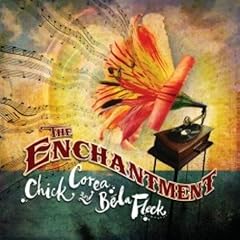
Since their earliest collaborations Bela Fleck and Chick Corea have belonged together. Their musical intellects match, though for some listeners the experience can be like watching an Einstein at the chalkboard. The bright, cheery, staccato music they produce engenders the humour in their performance: they frequently dare each other to play first or outshine the other. This album also features one of my favourite Fleck songs, Sunset Road, a good listen for the sophisticate.

Dialling Dylan

Over the years Dylan's music has entwined itself in my life, so much so that I sometimes think of him as a distant relative; you know, the type of uncle or aunt that you see seldom, but that always seems to direct your life in some way or another. Dylan helped me process religious conversion and Blood on the Tracks brought me back from the despair of failed romances. He puts our pain, suffering and humiliation into a digestible form, yet, as a fan, he requires that you take him on his own terms. This is what so many missed when he turned electric. Thus, as soon RSS feed came on my screen that he was coming to Victoria, I went to bobdylan.com and got some tickets, five days before they went on sale at the local box office. The seats were good and so was the company, my brother-in-law, Jer; I was looking forward to this night.

Although I didn't enjoy all of his interpretations of the "classics" and the fact they were interpreted at all, I had to respect his choice: the master bard had a right to know better. All of this came to head when he finally moved away from the keyboard and picked up his guitar (actually when the roadie that so longed for stage-time gave it to him); the fans were munching on the few scraps they had been thrown, barely able to distinguish his playing on Just Like a Woman, when the song ended and they cheered for more. None came, not even one song during an encore; Dylan was once more difficult to pin down, an-iconic. Nevertheless, I didn't know any of the men in their late fifties that comprised his band and I wished for some frame of reference, so I yelled above the crowd to the die-hard fan in front of me who had been writing down a set list, "Wouldn't it be great if Robbie Robertson appeared on stage." The fan responded with some empathy, "You never know." You never do know, but the band had a solid vibe; if Dylan wasn't as well versed in the keyboard, that was o.k. It was good to commune with him once more.

Wednesday, October 22, 2008

Gold Nuggets

I often wonder at Chance's machinations, how quick the beautiful can take up residence in one's being. Unfortunately, they often exit quicker than they entered, a quick gasp rather than a full breath. Fortunately, some stay and afford a modicum of stability. Recently, Chance struck while I researching my thesis chapter on groves; I found the book, Sacred Groves and Ravaged Gardens. The title held me at once, but the book is even more fascinating. It is Louise Westling's research on a handful of Southern writers. Look at how she begins the book, "When I was a young woman fresh out of college and sure my generation was going to correct the world's ills, my Kentucky grandmother, a model of the old-fashioned Southern lady, asked me if my friends and I believed in free love. That old term was far from our ideal of sexual equality and frankness ... That quaint idea made little sense to me for many years, though I puzzled about it as I tried to understand why the relations between men and women violated so many of my notions of cooperation" (ix).

The insights continue, "Yet nowhere else in American literature is there a group of accomplished women writers so closely bound together by regional qualities of setting, character, and time" (1). "If Welty celebrates womankind, Carson McCullers and Flannery O'Connor struggle against it" (5). "... he has performed the part of St. George by defeating a 'dragon' which threatened to kill Denis's heir--and, by implication, to violate some sacred family spirit. That dragon is also the intruding urban machine in the pastoral garden ..." (82-3).

She also includes some spectacular quotes and the breadth of her research is impressive:
A fair young body trampled to death--
This beautiful, glorious Lady of ours!
Bring spices and wine and all the spring's breath.
And bathe her with kisses and shroud her with flowers.

O breasts whose twin lilies are purpled with blood!
O face, whose twin roses with ashes are white!
O dead golden hair, at whose far splendor stood
Millions of true souls entranced with delight!
(Simms, Trampled to Death)

In a similar vein, the newly released, American and British Writers - The Spoken Word, appears to be an impressive collections that has received favourable reviews. These CD's contain audio clips from famous authors, including the only recordings of Virginia Woolf and Arthur Conan Doyle.

Sunday, October 05, 2008

Child Soldiers No More

From the day the tickets went on sale, I have been looking forward to the concert Child Soldiers No More. The benefit began in the usual UVic fashion: a lesser faculty member introducing Turpin, who in turn introduced the guests of honour, Dallaire and Cockburn. As Turpin speeches go this one was pretty good and Mary Ellen Purkis, the dean of HSD, got much better as the night wore on. The show proper began with a short PowerPoint presentation, which provided some background on and heart wrenching photographs of child soldiers. When Dallaire made his entrance he received an exuberant standing ovation; his obvious discomfort with this display of recognition and appreciation made him all the more worthy of it.

He then outlined the history of the child soldier weapons system, and its capacity, which encompassed the roles of mine clearers, prostitutes, ambush decoys, front-line soldiers and messengers. 300,000 children are involved, many forcibly, in the world today; not only in Africa where their involvement is widely known, but also in countries like Colombia and the Philippines. He described its origins: how battle lines, rules of engagement, and defined enemies eroded after the Cold War. The horrors of war have become the horrors of humanity. Nevertheless, Dallaire sees the solution in the essence of humanity; only by recognizing the humanness of every human can we make progress. We can no longer categorize human suffering by their assets; we can no longer let the insecurity of one super power dictate the globe's actions. Old models, such as peace keeping, do not work in this world. Rather middle powers, such as Canada, who have no imperial aims can facilitate the Responsibility to Protect (R2P); furthermore, the empowerment of women and education can facilitate change. The most touching story, for me, was his account of the child soldier, who with a shaky trigger finger and the barrel of the gun in Dallaire's nose, released his finger from the trigger when he spied the candy bar in Dallaire's hand.

At first Cockburn's laid back demeanour and the bright opening bars of his first song, seemed incongruent with Dallaire's depiction of the world; his footnote about Flor de Caña being mistaken with Florida Canyons only deepened this misgiving. However, as his performance wore on, I soon realized that his banter was a gift and that this evening had an ebb and flow: the subject was too severe to absorb for three hours straight. I soon found myself immersed in his talent; yes, he still has his chops. Nice touches, such as his falsetto on Lovers in a Dangerous Time, also added to the evening, however, his passion for peace was never far away. Despite my enjoyment, I still had a nagging feeling that Dallaire wouldn't appear on stage with Cockburn, but this sensation was quieted by Cockburn's announcement, "Let us bring Dallaire, after all this is no ordinary evening." What ensued was fabulous; Dallaire recounted two stories while Cockburn provided background music. As Dallaire told his tale of seeing the same look in childless boy's eyes as in his own son's and another of the shame that had cloaked girls who were rape victims, I encountered the power of story. The cadence of his voice, which matched perfectly with Cockburn's lick, only lulled you enough to make the sting of the horror tolerable. Thanks to both these extraordinary people this issue is indelibly etched on the minds of many.

Reverb

Reverb plug-in